
IEC 60502 vs IEC 60840 is an important comparison between two IEC standards for extruded-insulation power cables and their accessories. Both deal with cable construction, testing and application, but they apply to different voltage ranges and therefore different design situations.
In broad terms, IEC 60502 is used for low-voltage and medium-voltage distribution cables up to 30 kV, while IEC 60840 is used for high-voltage cables above 30 kV and up to 150 kV. The correct standard is normally selected from the system voltage, cable construction and project specification.
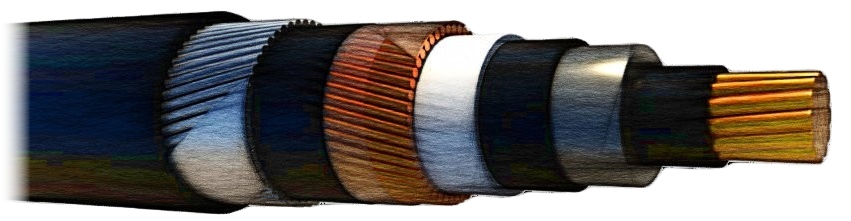
IEC 60502 at a glance
IEC 60502 covers power cables with extruded insulation and their accessories for rated voltages from 1 kV up to 30 kV. It is commonly used for distribution networks and medium-voltage installations.
- Conductor materials and sizes.
- Insulation and sheathing materials.
- Construction details for operational reliability.
- Electrical, mechanical and thermal testing requirements.
- Accessories such as joints and terminations.
For wider context on how IEC 60502 fits with other cable-sizing standards, see Cable Sizing Standards.
IEC 60840 at a glance
IEC 60840 applies to power cables with extruded insulation and their accessories for rated voltages above 30 kV and up to 150 kV. It is aimed at higher-voltage systems where electrical stress control, accessory design and long-term reliability become more demanding.
- Material specifications for high-voltage operation.
- Construction requirements for managing electrical stresses.
- Rigorous testing, including partial discharge and high-voltage test requirements.
- Accessory and jointing requirements suitable for high-voltage systems.
- Reliability requirements appropriate to transmission and major distribution infrastructure.
Key differences
| Feature | IEC 60502 | IEC 60840 |
|---|---|---|
| Voltage range | 1 kV up to 30 kV | Above 30 kV up to 150 kV |
| Typical application | Low-voltage and medium-voltage distribution networks | High-voltage transmission and major distribution systems |
| Conductor material | Copper and aluminium | Copper and aluminium |
| Insulation material | Typically extruded PE, XLPE or other specified compounds | Typically extruded XLPE for high-voltage service |
| Construction focus | Insulation, bedding, armour, sheath and accessories for distribution applications | Insulation screens, stress control, sheath design and high-voltage accessories |
| Testing | Electrical, mechanical and thermal tests appropriate to the voltage class | More demanding high-voltage testing, including partial discharge requirements |
| Accessories | Joints, terminations and associated accessories | High-voltage joints, terminations and accessories with more detailed stress-control requirements |
| Design emphasis | Safety and reliability for distribution networks | Long-term reliability and insulation integrity at higher electrical stress |
Selecting the applicable standard
The choice between IEC 60502 and IEC 60840 is usually dictated first by the cable rated voltage. Once the voltage class is known, the project specification should confirm the required standard, cable construction, test regime and any local or utility-specific requirements.
IEC 60840 is not simply a higher-voltage version of IEC 60502. The higher operating voltage brings additional focus on insulation screens, partial discharge performance, accessory design and control of electrical stress. These requirements affect design, manufacture, testing, installation and commissioning.
For current rating calculations associated with these cable types, see IEC 60287 Cable Current Capacity. For cable insulation materials, see Cable Insulation.